Gas safety certificates: what landlords must do by law
A plain-English guide to landlords' duties under the Gas Safety (Installation and Use) Regulations 1998: the annual CP12 check, who can carry it out, the 28-day and before-occupation rules for giving tenants the record, the two-month early-renewal rule, and the penalties for non-compliance.
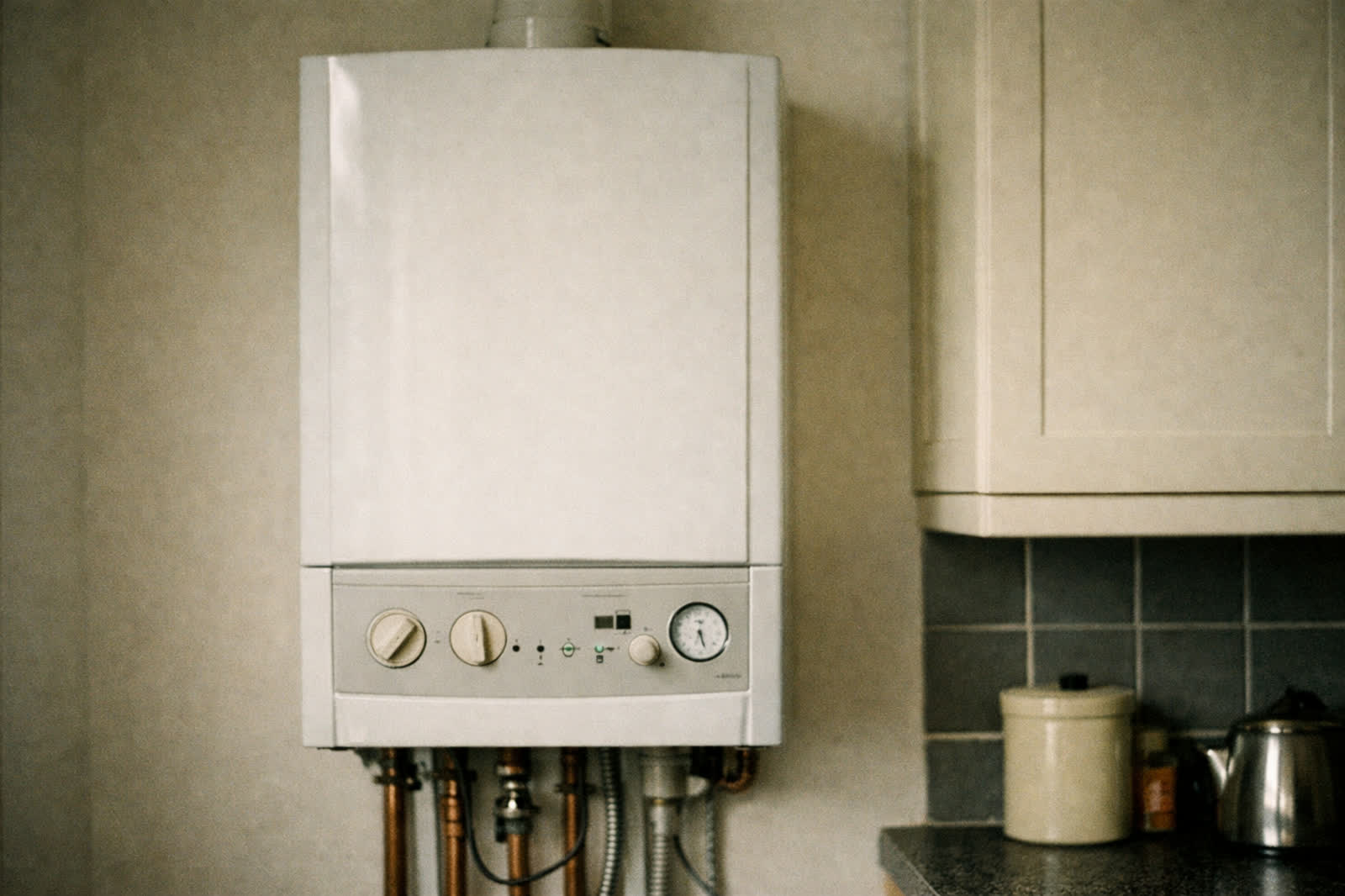
If you let a property in England with any gas appliance, pipework or flue in it, you have a specific, non-negotiable legal duty to keep it safe. This isn't a box-ticking formality landlords can leave to chance or delegate to a tenant — it's set out in detail in the Gas Safety (Installation and Use) Regulations 1998, and getting it wrong is a criminal offence, not just a tenancy dispute. This article sets out exactly what the law requires, who is allowed to carry out the check, when the paperwork has to reach your tenant, and what happens if any of it is missed.
The legal duty behind the certificate
The duty sits in regulation 36 of the Gas Safety (Installation and Use) Regulations 1998. It applies to any landlord renting out a property under a lease of less than seven years or under a licence — which covers the vast majority of residential tenancies, including assured shorthold tenancies, houses in multiple occupation, and rooms let in shared housing.
Regulation 36 requires every landlord to keep any gas appliance, installation pipework and flue that they own or provide for a tenant's use in a safe condition. On top of that general duty, there's a specific annual check requirement: each appliance and flue has to be checked for safety within 12 months of being installed, and then at intervals of no more than 12 months after that. Where a new tenancy starts, the check must have been done within the 12 months before the tenancy begins, or within 12 months of the appliance being installed, whichever is later.
This is the check that produces the document most landlords know as the gas safety certificate, or, more precisely, the CP12 — also called the Landlord Gas Safety Record. It isn't a certificate in the sense of a one-off pass/fail sign-off; it's a dated record that has to be renewed every year for as long as the property is let and the appliance remains in use.
Who can carry out the check — and what the record must contain
Only someone on the register of engineers approved by the Health and Safety Executive for this purpose can lawfully carry out the check or any gas work in the property — in practice, this means a Gas Safe registered engineer. Gas Safe Register is the official, government-approved gas registration scheme for the UK, and it's worth checking an engineer's registration and the specific appliance categories they're competent to work on before booking a check, since registration doesn't automatically cover every type of gas appliance.
The regulations are specific about what the resulting record must show: the date of the check, the address of the property, the landlord's name and address (or their agent's), a description and location of each appliance and flue checked, any defect found, any remedial action taken, confirmation that the check met the required testing standard, and the name, signature and registration number of the engineer who carried it out. Landlords must keep each record until two further annual checks have been completed, or, for an appliance that's removed from the property, for two years from the date of its last check.
Getting the record to tenants on time
Carrying out the check is only half the duty — the law is equally strict about when tenants actually see the paperwork. A copy of the record must be given to each existing tenant within 28 days of the date of the check. For a new tenant, a copy of the most recent record for each appliance and flue must be given before they move in — not within 28 days afterwards, but before occupation starts. The only exception is a let of 28 days or less, where the record can instead be displayed prominently in the property rather than handed over individually.
There's no lawful way to get around this by relying on a tenant's own arrangements. The regulations are explicit that nothing a tenant does or agrees to do about checking or maintaining a gas fitting can be counted toward a landlord discharging their own duty — the responsibility stays with the landlord (or, where a letting agent's contract says so, with the agent) throughout.

The two-month rule for renewing early
One detail trips landlords up more than almost any other: what happens if the annual check is done a little early. Since amending regulations that came into force in April 2018, a safety check carried out within two months before the check is due keeps the original annual deadline — rather than resetting the clock to the new, earlier check date. In other words, if a check is due on 1 March 2027 and the engineer carries it out on 10 January 2027, the next deadline is still 1 March 2028, not 10 January 2028. This discretion can only be used once per appliance or flue, and is mainly there to let a landlord align the check dates of several appliances in the same property onto a single annual visit. Landlords who routinely book checks a few weeks ahead of the anniversary, to avoid any risk of running over, don't lose anything by doing so.
What happens if a landlord doesn't comply
Failing to meet these duties isn't simply a matter of tenants complaining — it's a criminal offence under the Health and Safety at Work etc. Act 1974, the parent legislation behind the gas safety regulations. On summary conviction, a court can impose a fine of up to £20,000, up to twelve months' imprisonment, or both. On conviction on indictment, in the Crown Court, the fine is unlimited and the maximum prison term rises to two years, or both. Enforcement is carried out by the Health and Safety Executive, and a poorly maintained gas appliance is also one of the most serious ways a tenant can come to real physical harm: the Health and Safety Executive puts the number of deaths from gas-related carbon monoxide poisoning at around seven people a year in Great Britain. That human cost, as much as the legal exposure, is the real reason this duty exists.
A straightforward annual habit
In practice, the duty is manageable once it's built into a yearly routine: book the Gas Safe registered engineer a few weeks ahead of the anniversary rather than after it, keep the paperwork on file for the required period, and hand a copy to the tenant the moment it's done rather than waiting for the 28-day limit to approach. Landlords using a managing agent should check their management agreement states clearly who is responsible for booking the check and issuing the record — details of how Atlas Estates' management service handles this are set out on our fees page. For the fuller picture of the other safety certificates a rented property needs, see our related guide to landlord safety certificates, and for the closely linked duty to fit working alarms, see our guide to smoke and carbon monoxide alarm law for landlords.
This article is general information for landlords and is not legal advice; it reflects our understanding of the law as at November 2026, and landlords should take independent legal advice on their specific circumstances. For help managing gas safety compliance and other landlord obligations on a let property, Atlas Estates can be reached on 0161 710 4510, or in person at 12–14 Midland Street, Manchester M12 6LB.