How much deposit can a landlord take in England?
Five weeks' rent under £50,000 annual rent, six weeks at or above. Protect it and serve prescribed information within 30 days. Rent in advance has changed.

The deposit is capped at five weeks' rent where the annual rent is under £50,000, and six weeks' rent where it is £50,000 or more. It must be dealt with under an authorised scheme, and the prescribed information given to the tenant, within 30 days of receipt. And — the part most sources still get wrong — you may not ask for, encourage or accept any rent before the tenancy is entered into.
The cap, and how to calculate it
Paragraph 2(3) of Schedule 1 to the Tenant Fees Act 2019 makes any excess a prohibited payment. The test is the annual rent "immediately after its grant, renewal or continuance": five weeks below £50,000, six at or above.
One week's rent is the annual rent "divided by 52", not the monthly rent divided by four. On a £1,200 per month let, five weeks is £1,384.61 — round down.
Rent in advance: what actually changed
The Renters' Rights Act 2025 inserted paragraph 1(1A) into the same Schedule: rent is a prohibited payment if "(a) it is payable before the tenancy is entered into, and (b) the tenancy is an assured tenancy."
So the restriction bites at a moment, not after a period: the moment the tenancy is entered into. Before it, the lawful figure is nil. Section 5A of the Tenant Fees Act 2019 separately bars inviting, encouraging or accepting "an offer from a relevant person" to make one: a tenant volunteering does not help you.
After signing, the position changes. In GOV.UK's "pre-tenancy period", "the maximum amount you can usually ask for is one month's rent" where rent is monthly, and "28 days' rent" where it is not — figures that follow section 4A of the Housing Act 1988, which voids rent-period terms unless each period is "28 days or shorter" or "a monthly rent period". One period is the ceiling, and paragraph 1A stops you inflating it: across the first year, any excess of an earlier period's rent over a later period's is prohibited. Only council homelessness placements and social or supported housing may go further; councils enforce.
Protection: 30 days, three schemes, two models
Section 213 of the Housing Act 2004 starts two clocks the day the money arrives. The scheme's initial requirements must be met "within the period of 30 days beginning with the date on which it is received", and the prescribed information given "in the prescribed form or in a form substantially to the same effect" within the same 30 days. "Beginning with" counts the day of receipt.
The three authorised schemes are the Deposit Protection Service, MyDeposits ("including deposits that were held by Capita") and the Tenancy Deposit Scheme. Schedule 10 defines two models: under a custodial scheme the administrator holds the money in a designated account; under an insured scheme you keep it, pay disputed sums over on the administrator's direction, with the scheme insuring against landlords who do not.
Article 2(1) of the Housing (Tenancy Deposits) (Prescribed Information) Order 2007 sets the content; two sub-paragraphs cause most failures:
- (g)(iii) — "the name, address, telephone number, and any e-mail address or fax number of the landlord". Your details, not only the agent's.
- (g)(vii) — "confirmation (in the form of a certificate signed by the landlord)" that the information is accurate and the tenant was given the opportunity to sign.
What non-compliance costs
Section 214. A tenant, or a former tenant after the tenancy has ended, may apply to the county court where section 213(3) or (6) has not been complied with. Section 214(4) is mandatory: the court must order the landlord to pay the applicant between one and three times the deposit, within 14 days.
Section 215, substituted by the Renters' Rights Act 2025 (c. 26) from 1 May 2026, puts the sanction on possession. The court "may make an order for possession of the dwelling-house let on the assured tenancy only if" the deposit is held under an authorised scheme, the initial requirements have been met "(whether or not within the period mentioned by section 213(3))", and sections 213(5) and (6)(a) have been complied with. Lateness is thus forgiven for possession: late compliance can be cured before a claim, absent or defective compliance cannot. It is no answer to a section 214 award. The other exit is returning the deposit in full, or with agreed deductions.
The exemption is narrow: those subsections "do not apply in relation to an order for possession made on Ground 7A or 14 in Schedule 2 to the Housing Act 1988 (whether or not any other grounds for possession are met)." Those two antisocial behaviour grounds, and nothing else. Arrears, selling and moving in are all blocked by an unprotected deposit — see ending a tenancy after section 21 and what the Renters' Rights Act changed.
Deductions, and what wins a dispute
Your prescribed information had to state "the circumstances when all or part of the deposit may be retained by the landlord". If a deduction is not grounded in the agreement, it is hard to make.
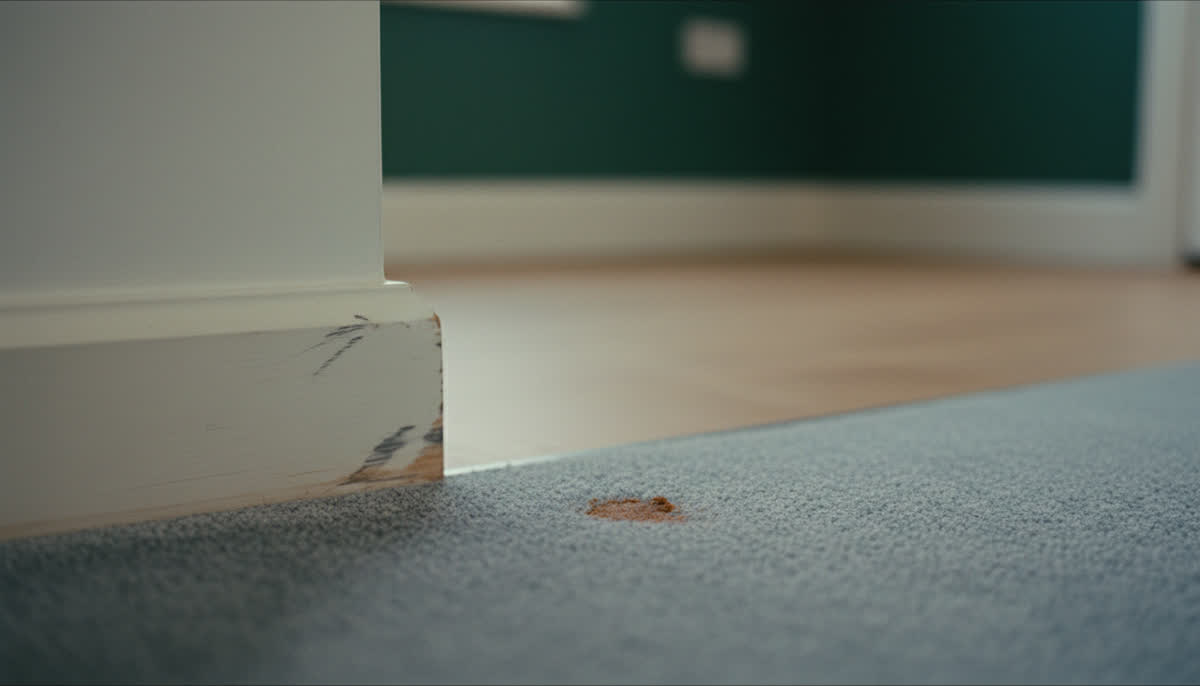
Unpaid rent, cleaning back to the check-in standard, damage beyond fair wear and tear, clearing belongings and rubbish, replacing missing items all stand up. Ordinary deterioration does not — a hallway carpet worn after three years, aged paintwork — nor does betterment. The recoverable figure reflects an item's remaining life, not its replacement cost.
Two disciplines decide most disputes: a signed, dated inventory at check-in and check-out with meter readings and keys; and dated photographs of every room and defect, start and end, from the same positions. Keep paid invoices rather than estimates, filed with your safety certificates.
Once you agree a figure you "must return your deposit within 10 days". If you cannot, the scheme offers "a free dispute resolution service": both parties must opt in, the money stays with the scheme meanwhile, and the decision is final. Adjudication is a paper exercise: the file is the case. See fully managed over tenant-find and our fees.
Pets do not raise the cap
A pet does not entitle you to a larger deposit: paragraph 2(3) sets one cap by annual rent with no exception for animals, so anything above it is prohibited whatever it is called. Pet damage comes out of the ordinary deposit — "You can keep money from the deposit to cover repair costs caused by pet damage." You have 28 days to answer a written request, you "cannot refuse without a fair reason", and "You cannot claim for the same damage twice."
General information, current at October 2026, and not legal advice. Deposit compliance turns on the dates and facts of the tenancy — confirm on GOV.UK or take advice before deducting or serving notice.
To have a deposit figure or prescribed information pack checked, ring 0161 710 4510, call in at 12–14 Midland Street, Manchester M12 6LB, or book a valuation.