Damp and mould in a rented home: what landlords in England must do
Inspect, find the cause, fix it and record it. Section 11, the fitness duty, the new £7,000 category 1 hazard penalty, and where Awaab's Law stands.

A landlord in England must keep the structure and exterior of the property in repair, and must keep the home fit for human habitation — and "freedom from damp" is one of the matters that decides whether it is fit. So treat a report of damp or mould as a repair issue: inspect, find the cause, fix the cause rather than wiping the mould off, and keep a dated record. Since 22 June 2026 a council can also impose a financial penalty of up to £7,000 where a rented home has a category 1 hazard it would have been reasonably practicable to remove.
Two duties you cannot contract out of
Section 11 of the Landlord and Tenant Act 1985 requires the landlord to keep in repair "the structure and exterior of the dwelling-house (including drains, gutters and external pipes)", plus the installations for water, gas, electricity, sanitation and heating. A blocked gutter soaking a wall is squarely a section 11 problem.
Section 9A, inserted by the Homes (Fitness for Human Habitation) Act 2018, implies a covenant that the dwelling is fit for human habitation when the lease is granted and "will remain fit for human habitation during the term of the lease". Section 10's list of matters for judging fitness includes "freedom from damp" and "ventilation". Damp is not an inference from a general duty. It is named.
Both duties carve out works for which the tenant is liable "by virtue of the duty of the lessee to use the premises in a tenant-like manner" — an exception narrower than landlords tend to hope. A tenant enforces section 9A in the county court: works, damages, and costs that dwarf the repair. And since section 21 ended in May 2026, possession is decided before a judge who can see the repair history.
What the council can do
Councils assess hazards under the Housing Health and Safety Rating System in Part 1 of the Housing Act 2004, and "damp and mould growth" is the first hazard on the prescribed list. Where a council considers a category 1 hazard exists, section 5 says it "must take the appropriate enforcement action": an improvement notice, a prohibition order, a hazard awareness notice or emergency remedial action. For a category 2 hazard those are powers, not duties.
Since 22 June 2026 there is one more. A new section 6A of the Housing Act 2004, inserted by Schedule 4 of the Renters' Rights Act 2025, lets a council impose a financial penalty where premises contain a category 1 hazard and, in its opinion, "it would have been reasonably practicable for the responsible person to secure the removal of the hazard". The amount is for the council but "must not be more than £7,000".
The test is not "was there a hazard" but "could you reasonably have dealt with it". A documented, prompt response is the answer.
Awaab's Law: social housing now, private renting consulted on
Awaab's Law has applied to social housing since 27 October 2025. For damp and mould, the landlord must investigate within 10 working days of being notified, write to the tenant with the findings within 3 working days of the inspection, and make the property safe within 5 working days.
It does not yet apply to private landlords. On 8 October 2026 the government opened a consultation on how Awaab's Law should be introduced for private renters, including the timescale for it to come into force. It closes on 18 December 2026. No commencement date is set and no regulations are published. Those social-housing timescales remain the only published benchmark for a prompt response, though, and working to that rhythm costs little.
Condensation, penetrating, rising — tell them apart first
Official guidance describes four types. The fix differs for each.
Condensation
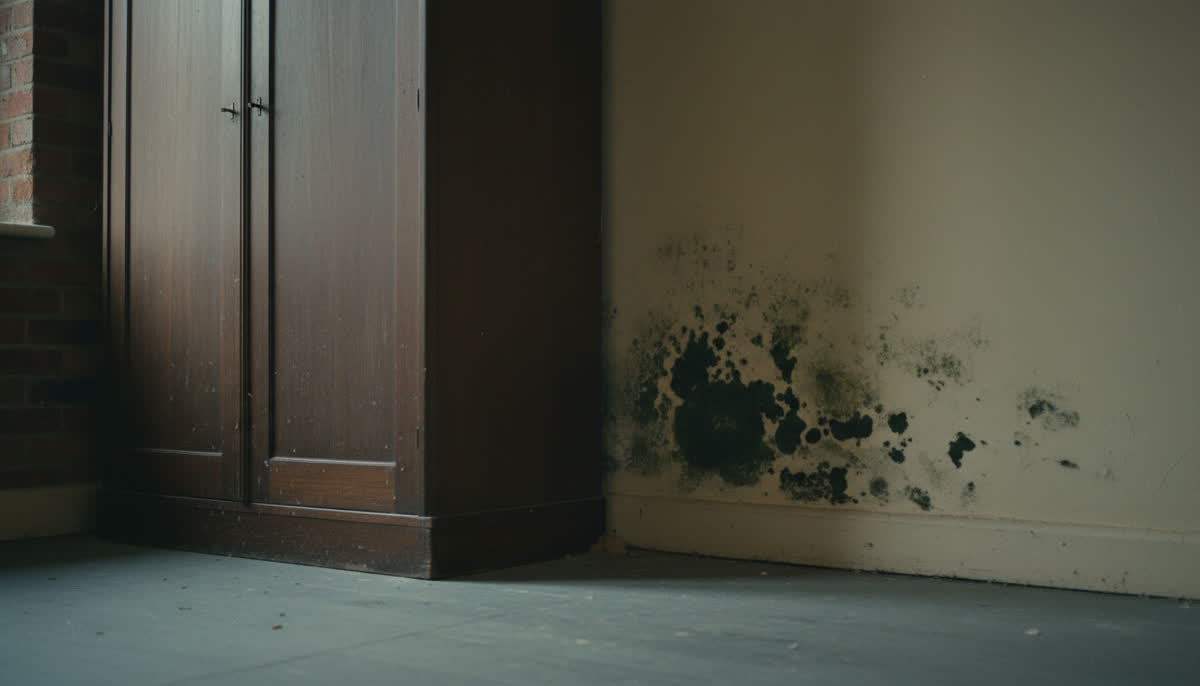
Warm, moist air meeting a cold surface. Expect black mould in corners, behind wardrobes, around window reveals and in bathrooms. Landlord-side causes: no extractor fan or one that does not move air, blocked airbricks, cold bridging, uninsulated solid walls, or inadequate heating.
Penetrating damp
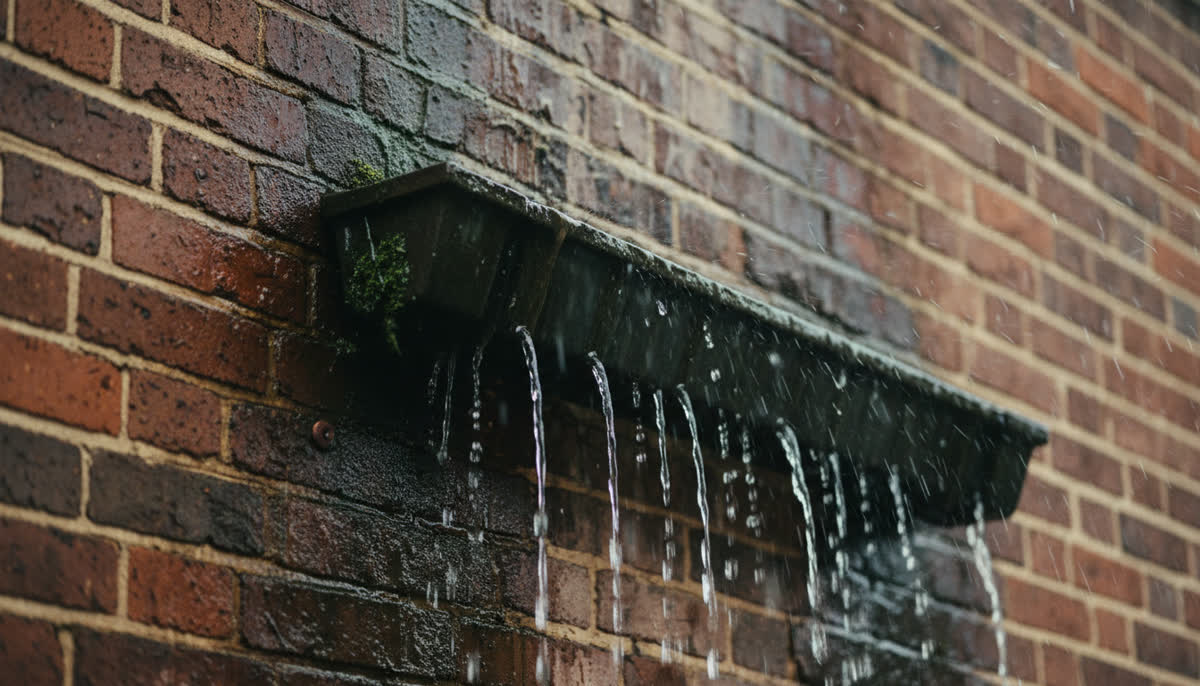
Water entering through a defect — failed pointing, cracked render, a split gutter, a slipped slate, or ground levels above the damp-proof course. The giveaway is a patch that darkens after rain and dries slowly.
Rising damp
Ground moisture rising through walls or floors, usually a tide mark with salt deposits in the plaster. Less common than it gets blamed for.
Traumatic damp
Leaking or burst pipes, a failed overflow, a washing machine. Usually the fastest to find.
"Lifestyle" is rarely the answer
The guidance is blunt: "We are absolutely clear that it is totally unreasonable to blame damp and mould in the home on 'lifestyle choices'." Cooking, washing and drying clothes produce moisture in every household. A home has to cope with ordinary life.
Tenant behaviour can still contribute — furniture against a cold external wall, an unvented tumble dryer, a fan left switched off. Put that in writing as advice, alongside the works, not instead of them. A letter blaming the tenant and promising nothing becomes the first exhibit in the claim.
On health, stay with the guidance: "The respiratory effects of damp and mould can cause serious illness and, in the most severe cases, death."
How to respond to a report
- Acknowledge in writing the same or next working day, dated.
- Inspect within days, not weeks, with someone competent.
- Record it: dated photographs of each affected area, and what the tenant told you.
- Diagnose the cause. Mould is the symptom; the moisture source is the defect.
- Fix the cause and remove the visible mould. Guidance expects both.
- Write to the tenant with your findings, the works and the dates.
- Re-inspect at least six weeks after the work, as the guidance advises.
Months later, the only thing protecting you is the file.
A short autumn checklist
- Clear gutters, gullies and downpipes — and look while it is actually raining
- Test every extractor fan: if it will not hold paper to the grille, it is not working
- Run the heating before the tenant needs it
- Check external ground and path levels against the damp-proof course
- Ask the tenant directly whether they have seen any mould
Damp is one of the few areas where the cheap, fast response and the legally safe one are the same thing. We keep an in-house construction team, so inspection and works run on one timeline; what management includes is on our fees page.
General information, current at October 2026, and not legal advice. Awaab's Law does not yet apply to private landlords and is subject to consultation. Confirm the position for a specific property with your local council or GOV.UK.
If a tenant has reported damp and you are not sure what you are looking at, ring 0161 710 4510 and we will get someone round to look at it properly.